The Land of White Gold brings together at the Museo Gaiás more than 160 pieces from up to 28 museums and institutions across Spain, Portugal, Denmark, and the United Kingdom. The exhibition will open to the public on the afternoon of Friday 20 November on the second floor of the Museo Centro Gaiás.
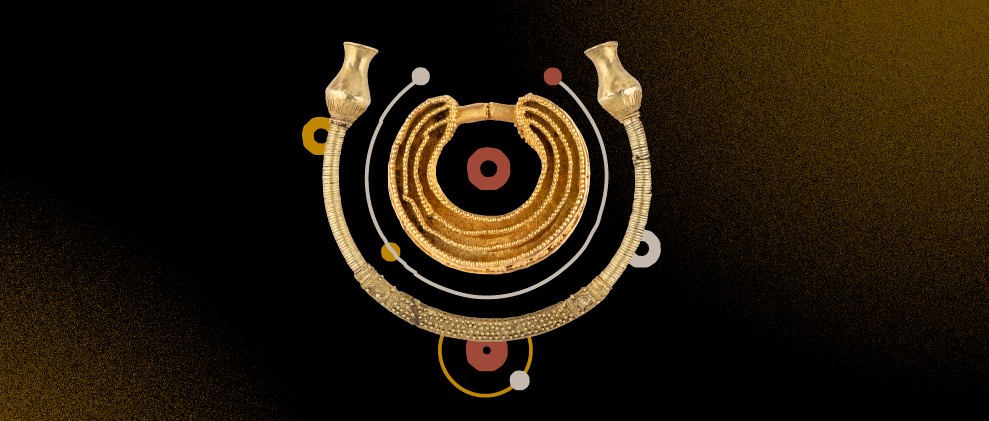
The exhibition displays torcs and other pre-Roman jewellery—such as diadems, earrings, bracelets, and hair rings—along with sculptures, tools, and objects related to goldworking. Accompanied by audiovisuals, illustrations, and an innovative archaeoplanetarium, they allow visitors to explore both the technology and the social and ritual uses of ancient gold.
White gold—so named by the Greek geographer Strabo due to the high presence of silver mixed with the metal—was once a very abundant resource in the lands of the northwest of the Iberian Peninsula. Its use in these societies dates back to the early stages of prehistoric metallurgy, 4,500 years ago, and continued to evolve until they came into contact with Rome.
Curated by the director of the Institute of Heritage Sciences (INCIPITCSIC), Xosé-Lois Armada, the exhibition is supported by the cuttingedge archaeological research of recent years. The Land of White Gold maps the evolution of goldsmithing among the Gallaecian peoples and its enduring influence down to the present day. Prehistoric designs, such as spirals and triskeles, have become identity emblems and a source of inspiration for contemporary artisans, while chance finds and the quest for Gallaecian treasures have also given rise to numerous legends and oral traditions.